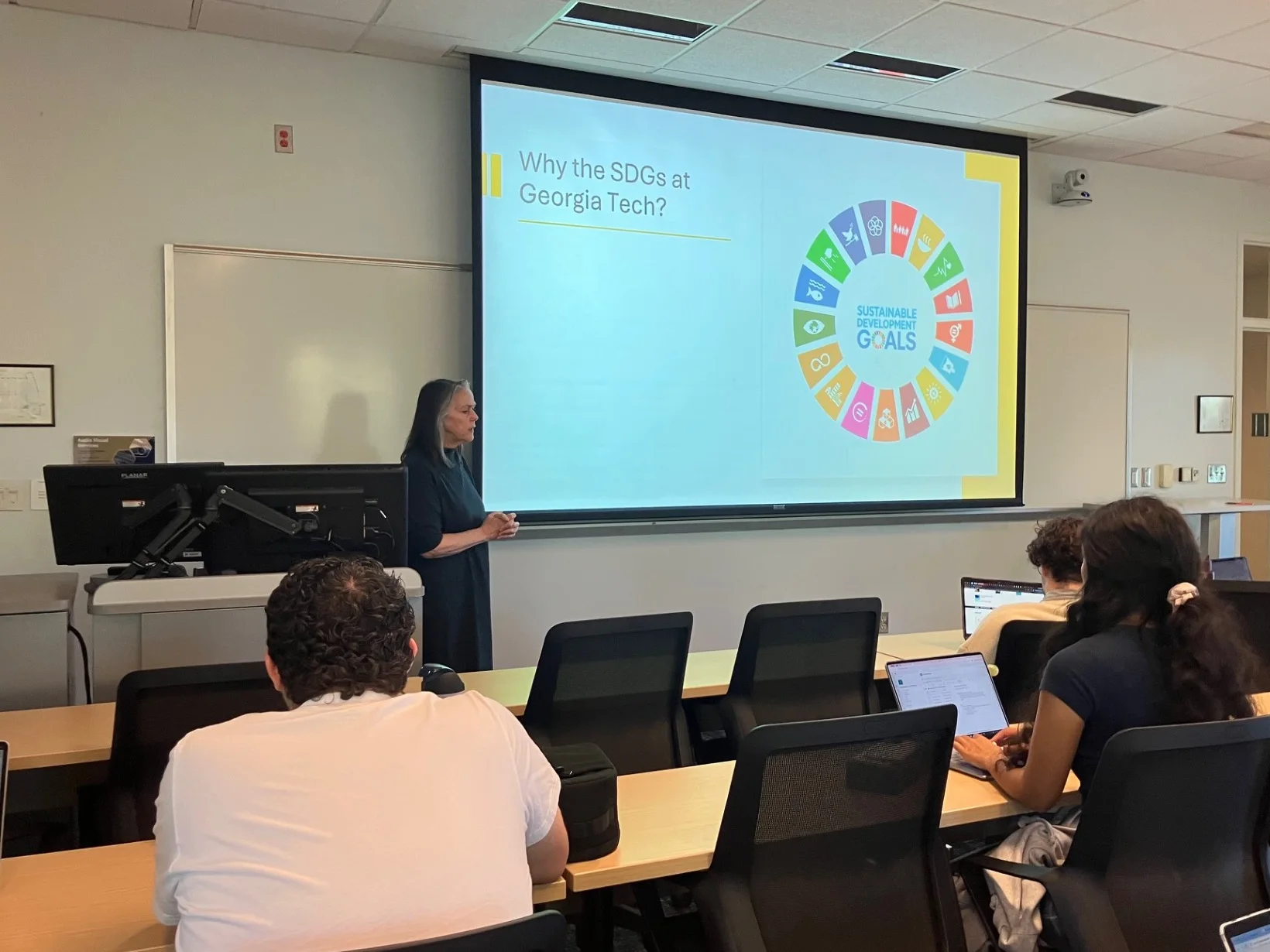
Dr. Rebecca Watts Hull on the U.N. SDGs and environmental health
Georgia Tech's Dr. Rebecca Watts Hull on the U.N. Sustainable Development Goals, the targets that cover hazardous chemicals and worker safety, and what the history of leaded gasoline shows about the role of scientists.
On November 9, the VIP welcomed back Dr. Rebecca Watts Hull, Assistant Director of Faculty Development for Sustainability Education Initiatives at Georgia Tech's Center for Teaching and Learning and Adjunct Senior Academic Professional in the School of History and Sociology. Her talk, "Exploring the U.N. SDGs and their Connections to Environmental Health," introduced the United Nations Sustainable Development Goals and asked where the program's research fits among them.
She traced the goals from the 1987 Brundtland Report, which defined sustainable development as meeting the needs of the present without compromising the ability of future generations to meet their own, through the 1992 U.N. conference in Rio de Janeiro and the Millennium Goals of 2000, to the 17 goals set for 2015 to 2030. Each goal is broken into targets, 169 in all, and progress on the targets is tracked with 232 statistical indicators. The goals are interconnected: progress toward one influences progress toward another.
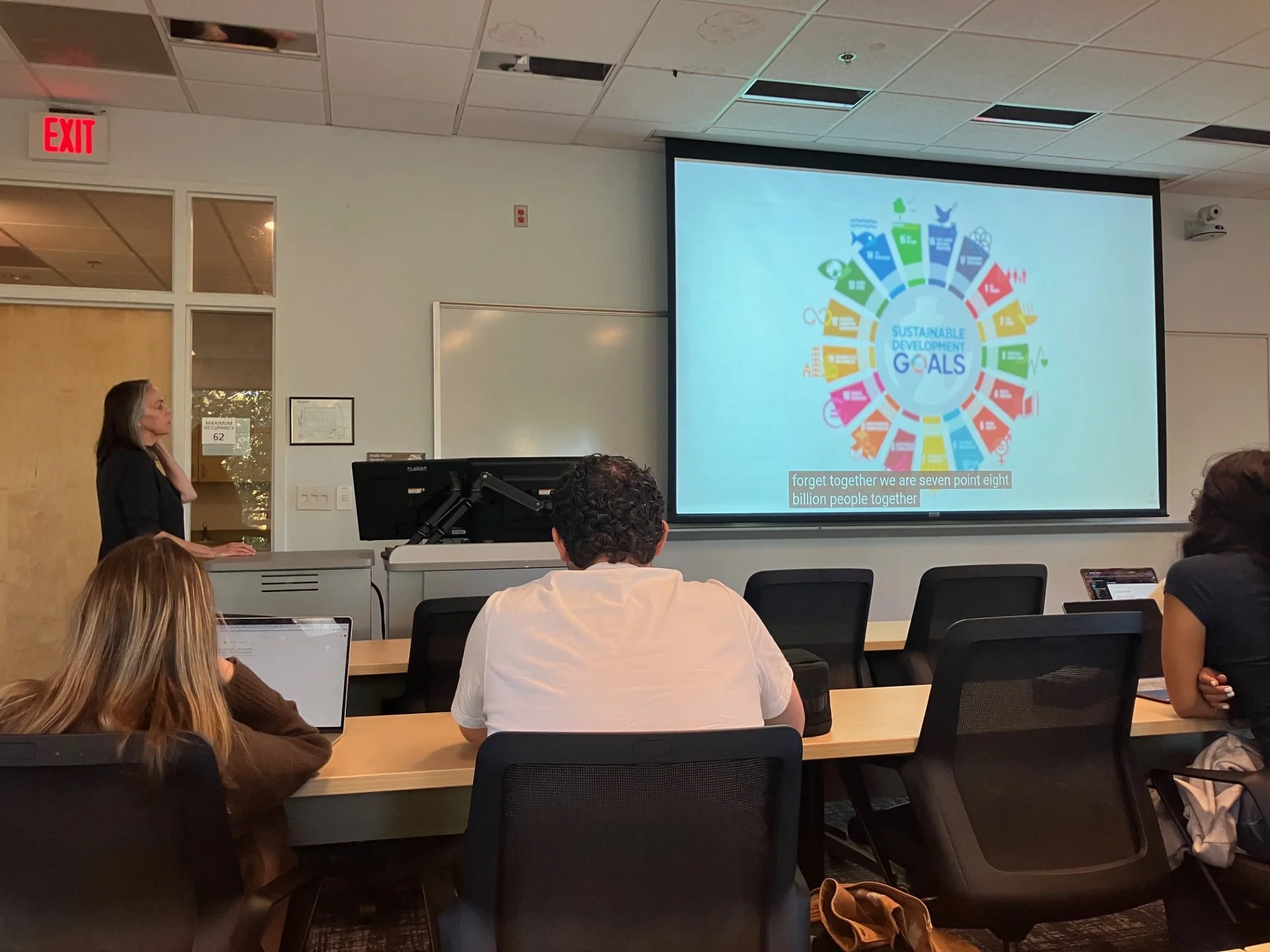
Two targets sit closest to the program's work. Target 3.9, under Good Health and Wellbeing, is to substantially reduce the number of deaths and illnesses from hazardous chemicals and from air, water and soil pollution and contamination. Target 8.8, under Decent Work and Economic Growth, is to protect labor rights and promote safe and secure working environments for all workers, including migrant workers and those in precarious employment. An exercise asked students to choose a goal other than 3 and 8, read its targets on the U.N. site, and look for connections to their own team's research. Her example of how the goals relate was reducing risk from industrial accidents, alongside Target 6.3 on water quality and the release of hazardous chemicals and Target 11.6 on air quality in cities.
The second half asked how scientists and scientific research are essential to environmental and public health advocacy, with lead as the case. In the 1920s auto companies proposed adding tetraethyl lead to gasoline. Dr. Alice Hamilton, the first woman on the Harvard faculty, argued against it, industry-funded research defended it, and the industry won. From the 1950s into the 1970s the evidence grew. Geochemist Clair Patterson found an abundance of lead in the environment and linked it to leaded gasoline. St. Louis community organizer Ivory Perry linked lead paint dust and chips in deteriorating public housing and schools to health and development problems in children, and won a local ban on lead paint in municipal buildings and playgrounds. Psychiatrist Herbert Needleman linked lead levels measured in baby teeth to IQ and language ability in children. In the 1970s the EPA set limits for lead in air under the Clean Air Act and a timeline for phasing lead out of gasoline.
Her answer to why lead was finally regulated had four parts: scientific evidence, a growing recognition of the negative impacts of technology and consumer society, whistleblowers and community activists, and an environmental movement that brought the EPA, the Clean Air Act and strong public support for pollution regulation. She closed by asking students what their own role will be, and pointed them to Georgia Tech's sustainability-related courses, which now carry a SUST attribute in the course registration system.